


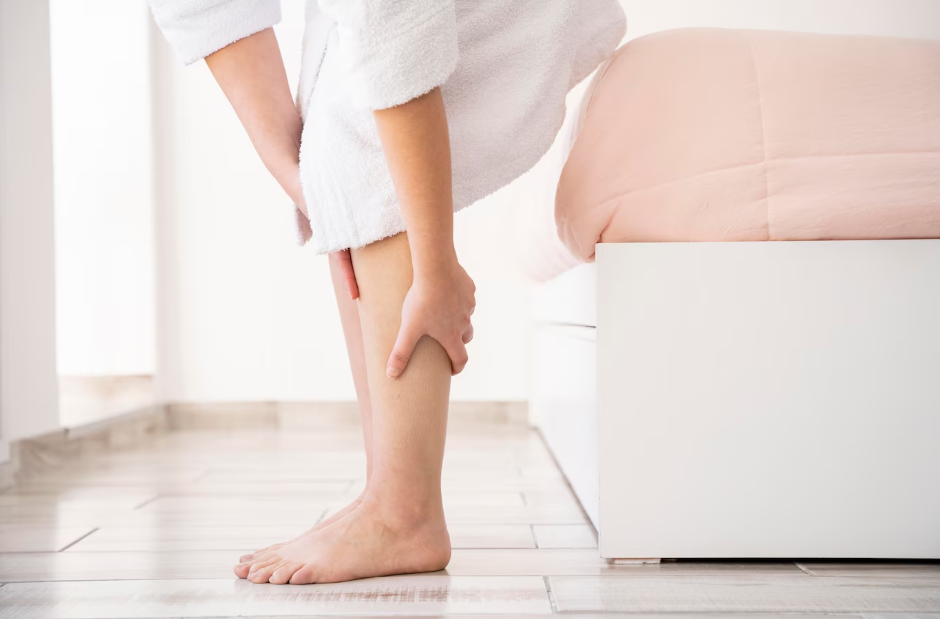
Ever been jolted awake by a sudden cramp in your calf? One minute you’re sound asleep, the next your leg’s tying itself in knots. Leg cramps—those involuntary, painful muscle contractions—are super common. If you know what causes muscle cramps in legs, you can take simple steps to prevent them and ease the pain when they strike. Let’s dive in.
What’s a Muscle Cramp, Anyway?
A cramp happens when a muscle tightens up on its own and won’t let go. It usually hits the calf but can happen in your thighs, feet or even hands. You feel a sharp, intense squeeze and the muscle may form a hard knot.
Main Triggers of Leg Cramps
- Dehydration & Mineral Imbalance
- Not drinking enough water or losing a lot of sweat.
- Low levels of potassium, calcium or magnesium make muscles more likely to spasm.
- Overuse or Muscle Fatigue
- A tough workout without proper warm‑up or cool‑down.
- Sitting or standing in the same position for hours, slowing blood flow.
- Poor Sleeping Position
- Pointing your toes down under the covers or tucking legs too tight can pull on your calf.
- Aging
- As we get older, muscles hold less water and aren’t as springy.
- Medications & Health Conditions
- Diuretics, blood‑pressure meds or cholesterol drugs can cause cramps.
- Conditions like diabetes, nerve damage or varicose veins also play a role.
- Pregnancy
- Extra weight, shifts in blood flow and mineral needs can trigger cramps.
Simple Tips to Prevent Cramps
- Stay Hydrated
Aim for 1.5–2 liters of water a day. If you sweat a lot, sip more—don’t chug at once. - Balance Your Minerals
Eat bananas, potatoes or spinach for potassium; milk or tofu for calcium; nuts and whole grains for magnesium. - Stretch & Warm Up
Before bed or workouts, do calf stretches: stand facing a wall, one foot back, heel down, lean in. - Move Often
If you sit all day, stand up and walk a bit every hour. If you’re on your feet, shift your weight and stretch. - Adjust Sleep Setup
Keep feet relaxed—roll a towel under your ankles so toes aren’t pointed down. - Keep Warm
Cover your calves at night and consider a quick warm foot bath before bed.
What to Do When a Cramp Strikes
- Stretch It Out
Straighten your leg and gently pull your toes toward you, or stand and press your heel into the ground. - Massage & Heat
Rub the tight spot or use a warm towel to help the muscle relax. - Move Around
Take a few steps or shake your leg so blood flows and the muscle resets.
When to See a Doctor
Most leg cramps aren’t serious. But check in if:
- Cramps hit you almost every night.
- They last more than 10 minutes or are unbearably painful.
- You have numbness, tingling or weakness in the leg.
- They strike in odd places like your thigh or hip.
Quick Takeaway
What causes muscle cramps in legs?
- Dehydration & low electrolytes
- Overuse or staying in one position too long
- Bad sleep posture
- Aging, pregnancy, certain meds or health issues
To stop cramps: drink more water, eat a balanced diet, stretch regularly, move around, keep your legs cozy and sleep with your feet relaxed. And if a cramp does catch you, remember to stretch, massage, and walk it off. Here’s to pain‑free nights!